Financial

The dollar’s strength is increasingly driven by funding stress, not stable safe-haven confidence China’s shift from U.S. Treasuries toward gold reflects rising concern over U.S.
Read More
SFDR has increased disclosure, but it has not shifted capital in a meaningful way Europe’s sustainable finance rules prioritize paperwork over market consequences Real reform must link sustainability claims to enforceable financial incentives
Read More
The weak dollar reflects a loss of trust in U.S. financial stability Political risk is now priced directly into U.S.
Read More
Ukraine cannot rely on the 1990s transition model without rebuilding core infrastructure The Korea 1953 case shows why catalytic capital must target hard assets first A phased Ukraine reconstruction strategy is key to unlocking private investment and EU integration
Read More
Silent tightening was not silent — it reshaped global credit through hidden market channels Geopolitical shocks shifted capital from venture funding to private credit, slowing growth The real policy failure is ignoring how financial plumbing redirects risk
Read More











Banks increasingly meet capital rules with synthetic structures instead of real equity Derivatives and risk transfers weaken the power of countercyclical buffers Regulation now measures resilience on paper more than resilience in practice
Read More
Delayed investment is the hidden tax of policy uncertainty across all economies Unclear rules turn rational caution into long-term growth loss Predictable policy is not cosmetic reform; it is a core economic growth tool
Read More
Payment rails, not digital tokens, now define real monetary sovereignty Stablecoins change the form of money, but control depends on who governs settlement and redemption Policy power survives only if tokenized money clears on domestically regulated infrastructure
Read More
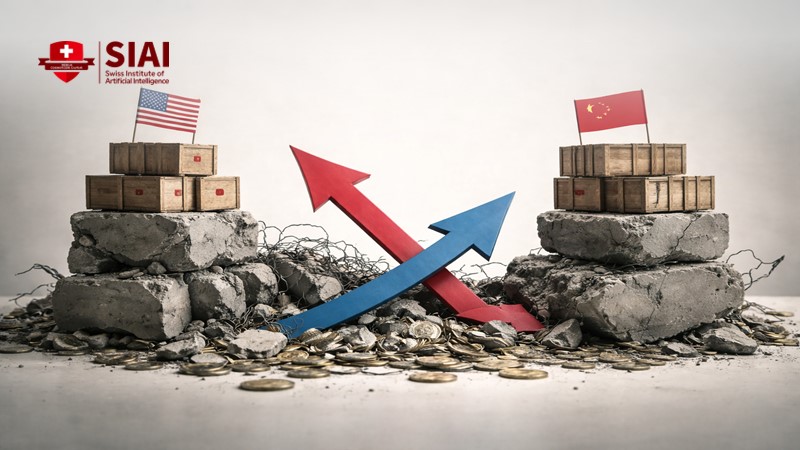
Reciprocal tariffs raise costs at home, shrink global trade, and rarely deliver lasting protection When two countries retaliate, third-party exporters often gain while consumers and firms lose Measuring the true cost of protection shows tariffs and counter-tariffs are equally damaging policies
Read More

Inflation is a mix of shocks and trends, not a single number Inflation decomposition clarifies causes and improves policy decisions It should be central to both forecasting and economic education Inflation isn't simple.
Read More
Lower capital requirements failed to increase UK lending Banks chose shareholder payouts over new loans Capital policy without conditions does not drive growth In December 2025, the Financial Policy Com
Read More
AI investment looks inflated, but much of its value is already embedded in real productivity gains Profits and adoption show substance, even as debt and feedback loops create fragility The real policy challenge is managing systemic risk without mistaking transformation for a bubble
Read More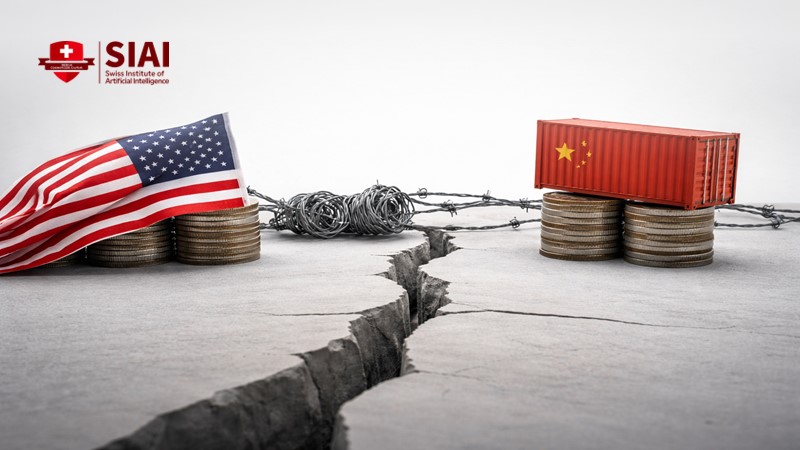

The neutral interest rate is rising Borrowing costs for education will stay higher Hedge risk and fund only projects with fast, proven payback In 2025, the U.S.
Read More

Stablecoin regulation is about making token money behave like deposits in a crisis The open transaction layer is the main weak point If it stays weak, bank-issued tokenized deposits will win In mid-November 2025, the total amo
Read More
Rising interest costs make France’s sovereign debt sustainability a school budget problem Higher defence pressure tightens the squeeze on education Italy shows credible fiscal plans can restore sovereign debt sustainability without wrecking schools
Read More
Housing wealth losses are squeezing education budgets Cuts hit “extras” first, widening gaps fast Schools need funding buffers and lower pressure According to research, a 10% change in home values can predict a 1.6% chan
Read More
2022 proved the nonlinear Phillips curve under tight labor Use two-speed budgets: inflation >4% and v/u >1 trigger Teach regime-switching to keep small misses small After the pandemic, inflation surged: in Europ
Read More